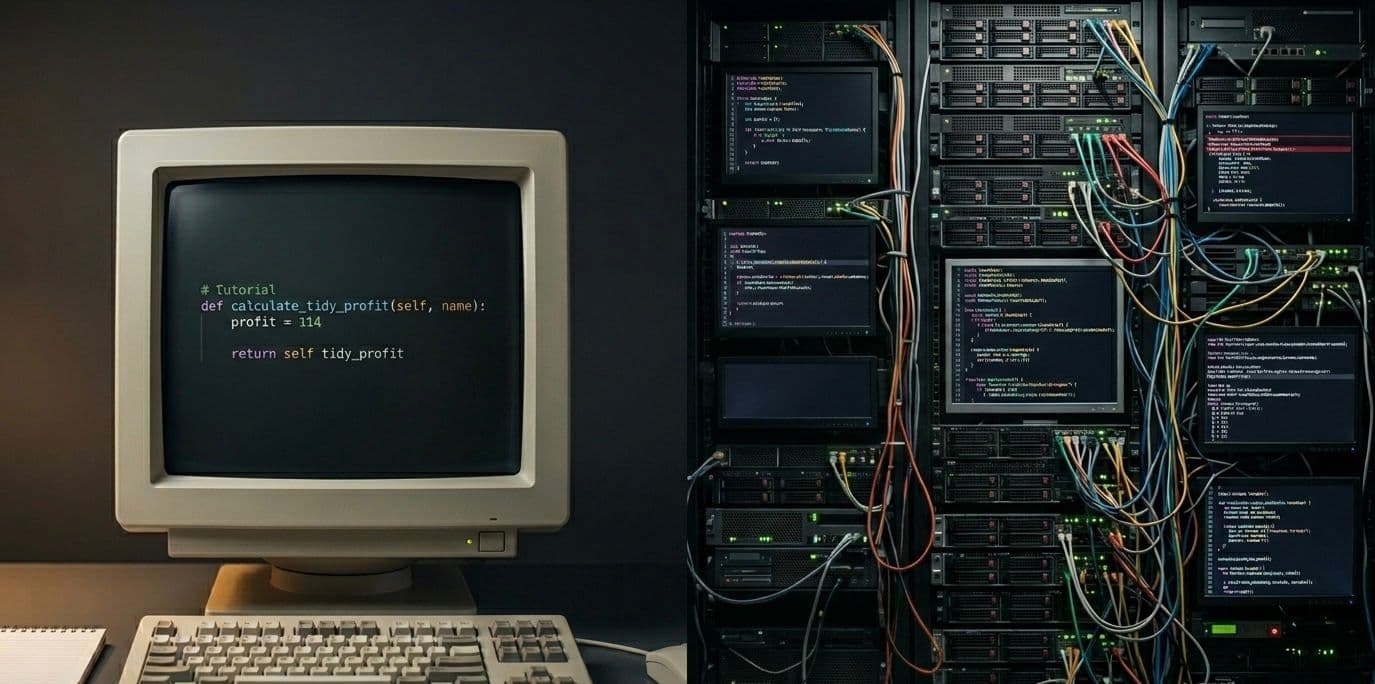
When you’re learning to code, everything feels clean.
Projects are small
Logic is simple
Everything makes sense
Then you start working on a real world codebase.
And suddenly… nothing looks like what you learned.
The First Shock: It’s Messy
Real world code is not perfect.
You’ll see:
Inconsistent naming
Duplicate logic
Huge files doing too many things
Code written by 10 different people
And your first reaction is:
“This needs to be rewritten.”
It doesn’t.
The Reality: It Works, So It Stays
Here’s the thing no one tells you:
If the system works, rewriting it is risky.
Even if:
It looks bad
It’s hard to understand
It feels outdated
Because in production, stability > perfection.
You’re Not Building from Scratch Anymore
In tutorials, you control everything.
In real systems:
You inherit decisions
You deal with constraints
You work around existing logic
You don’t just write code.
You navigate it.
Debugging Becomes Your Main Skill
In real codebases, most of your time is not spent building.
It’s spent:
Understanding existing code
Tracing bugs
Figuring out side effects
Avoiding breaking things
This is where developers grow the most.
Clean Code Is a Luxury, Not a Default
You might know best practices.
But in real projects:
Deadlines exist
Business priorities shift
Tradeoffs are constant
So code is often:
“Good enough”
Not perfect
Built under pressure
And that’s normal.
Refactoring Is Strategic, Not Emotional
A common mistake:
Trying to fix everything at once.
That doesn’t work.
Good developers:
Improve code gradually
Refactor only what they touch
Avoid unnecessary rewrites
They optimize over time, not instantly.
Communication Matters More Than Code
In real world teams:
You explain decisions
You discuss tradeoffs
You align with others
Because code is not written in isolation.
It’s built collaboratively.
The Biggest Shift
The real shift is this:
You stop thinking like someone who writes code
And start thinking like someone who maintains systems
That’s the difference between learning and working.
Final Thought
Real world codebases are not clean.
They’re complex, layered, and imperfect.
And that’s exactly where real engineering happens.
If you can understand, navigate, and improve messy systems…
You’re no longer just a developer.
You’re becoming an engineer.